
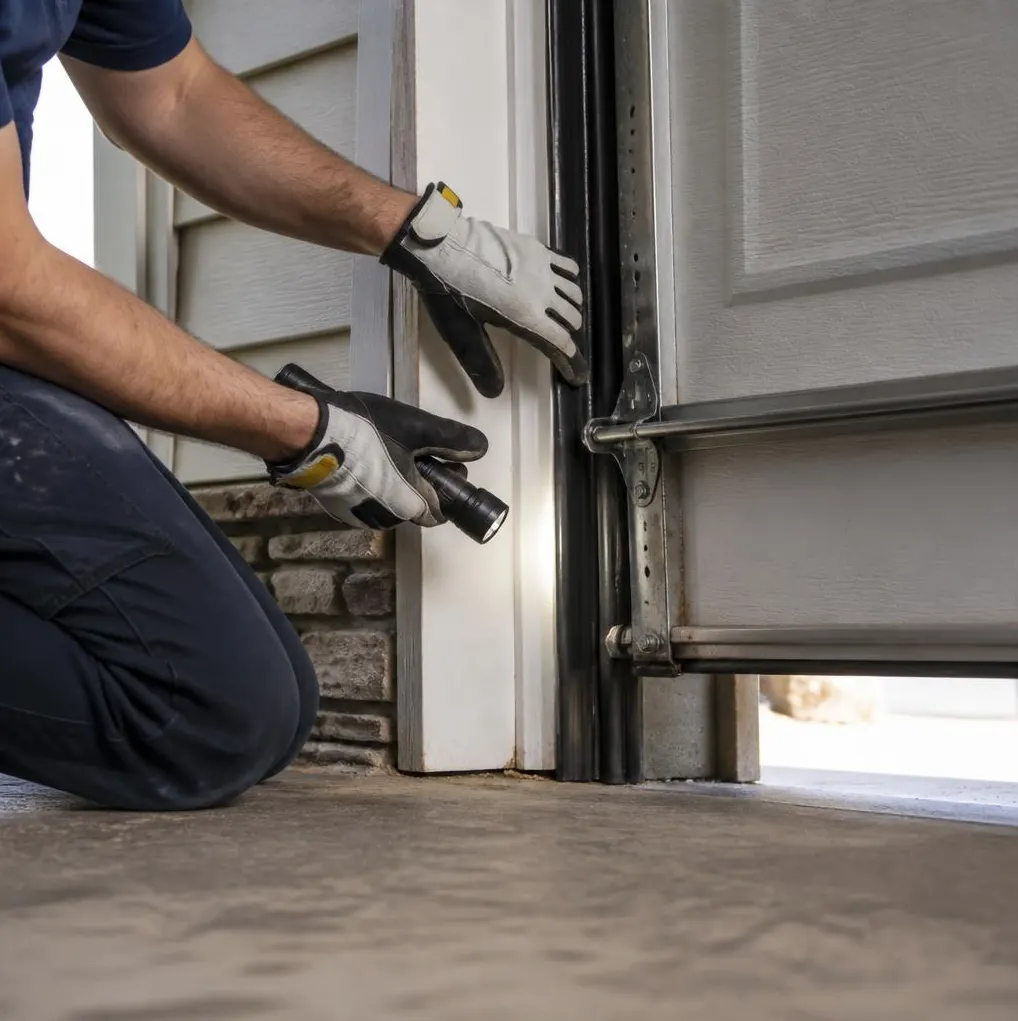
What a Technician Sees on a Typical November Call
After a summer of afternoon downpours and salt-heavy air rolling in off the Gulf, most service calls around US-19 and the surrounding neighborhoods follow a pattern: rust freckling the torsion spring coils, grit-packed tracks that squeal on the way up, photo-eye sensors knocked a few degrees out of alignment by a bumped ladder or ride-on mower, and factory lubricant that's long since washed out of the rollers. None of it looks dramatic yet. But by the time a homeowner calls because the door is grinding or hanging crooked, the small stuff has usually been building for months. The good news: catching it now, as the humidity starts to drop and the heavy storms taper off, takes about twenty minutes and a handful of tools you probably already own.
Tools You'll Need
- Work gloves and safety glasses
- A flashlight
- A tape measure or level
- Silicone- or lithium-based garage door lubricant (not WD-40 or household oil, which attract dust and grit)
- A clean rag
- An adjustable wrench or nut driver set
- A sturdy stepladder
The 20-Minute Routine
- Walk the tracks. With the door closed, run your flashlight along both vertical and horizontal tracks. Look for rust spots, dents, or bent sections, and brush out any leaves, sand, or debris that's collected from storm runoff. Tracks that are even slightly out of plumb will cause the door to bind.
- Tighten the hardware you can reach. Vibration from daily use loosens roller brackets, hinges, and the bolts holding the track to the wall. Go over each one with a wrench, snugging anything loose. Leave the torsion spring's center bracket and any cable hardware alone — that's technician territory, covered below.
- Run the balance test. Pull the emergency release cord to disconnect the opener, then lift the door by hand to about waist height and let go. A properly balanced door stays put. If it drops or shoots upward, the spring tension is off, and the opener is doing work it shouldn't have to — which shortens its life fast.
- Check the safety sensors. Wipe the lenses of the two photo-eye sensors near the bottom of the tracks with a clean, dry rag — humidity and dust film them over more than most people expect. Then make sure both are pointing at each other and sitting at the same height; even a slight tilt from a bumped ladder can cause random reversals or a door that won't close at all.
- Lubricate the moving parts. Apply lubricant to the rollers, hinges, and the springs' outer coils (torsion or extension), then open and close the door a couple of times to work it in. Wipe away any excess so it doesn't collect grit. This single step does more to quiet a noisy door than almost anything else a homeowner can do.
- Inspect the weatherstripping. Check the rubber seal along the bottom of the door for cracking, gaps, or swelling — Florida's humidity swings cause this material to expand and contract more than it would in a drier climate, and a failed seal lets water and pests in during the next round of heavy rain.
- Look, don't touch, the cables and springs. With the door closed, shine the flashlight on the lift cables and spring coils. Frayed strands, visible rust pitting, or gaps between spring coils are signs of wear that are close to failure. This is a look-only step — more on why below.
Where the Line Is
Everything above — tightening visible bolts, lubricating, checking sensor alignment, testing balance — is safe for a homeowner to do with the door closed or with the opener disconnected. What's not on that list is anything involving the torsion spring itself, the lift cables, or the opener's force and limit settings. A torsion spring holds enough stored tension to cause serious injury if it releases while someone is adjusting it, and a cable that lets go under load can snap back hard. If your balance test failed, if you spotted rust or fraying on the cables or spring coils, or if the sensors won't hold alignment no matter how many times you square them up, that's the point to stop and call in a technician rather than keep troubleshooting.
When to Call Holiday Garage Door
If your twenty-minute check turns up a door that won't balance, springs showing rust or gaps, or cables with visible wear, it's time to bring in a professional rather than push the opener harder. Our Garage Door Maintenance & Tune-Up service covers a full inspection of springs, cables, rollers, and hardware, plus adjustments that aren't safe to do yourself — and if something's already failed, our Cable & Roller Replacement service gets it back to proper working order before the part damages the opener or track further. Catching these issues now, before the next round of humidity swings or storm season, is almost always cheaper and simpler than waiting for a full breakdown.
If your home check turned up anything beyond tightening bolts and lubricating, give Holiday Garage Door a call. We serve Holiday, Tarpon Springs, Palm Harbor, New Port Richey, Port Richey, Elfers, East Lake, and Trinity with honest pricing and fast turnaround — schedule a seasonal tune-up today and head into the new year with a door that opens the way it should.